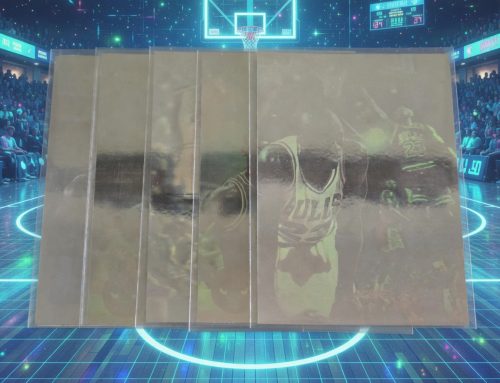
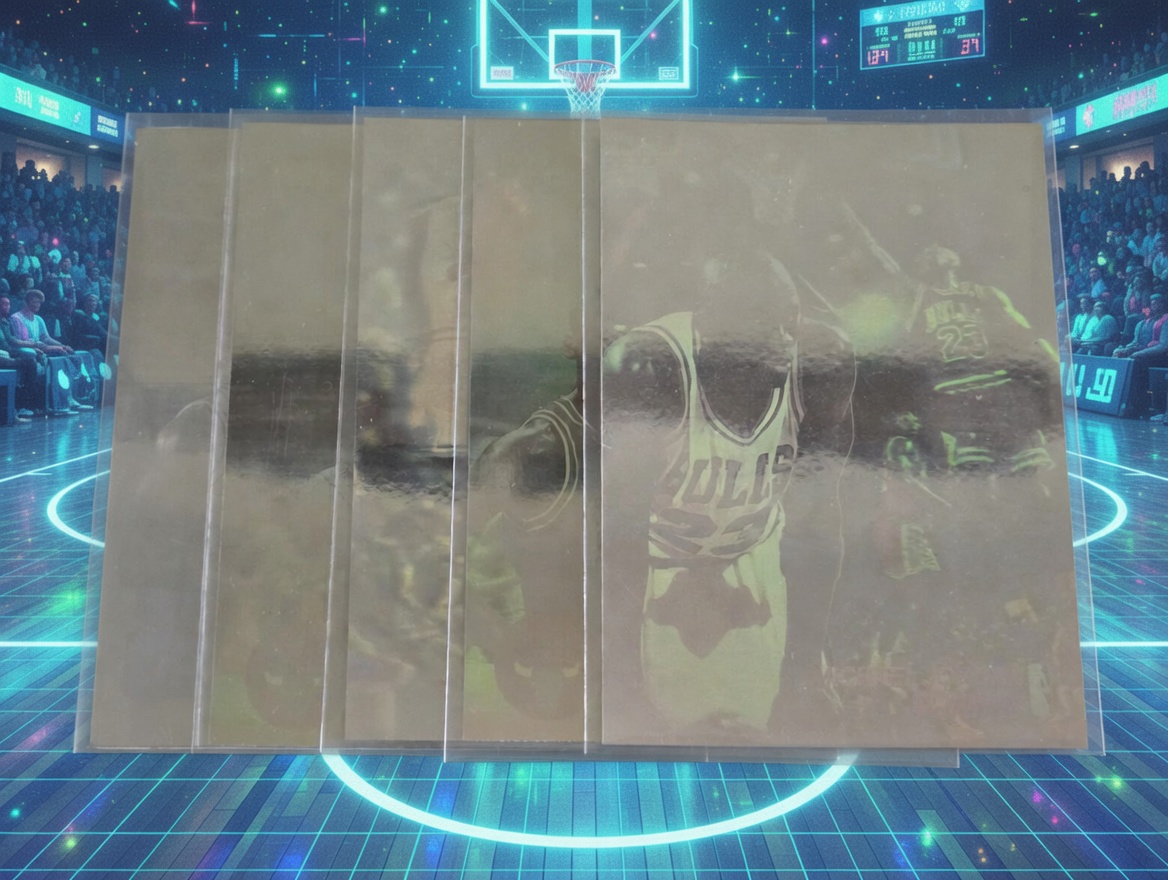
Proper design elements: AW9 designation, photo selection, jersey details (“BULLS 23”), text placement, and back layout matching known examples of this insert.
No obvious signs of trimming, counterfeiting, or modern reprinting (fakes of these often have flatter holograms, mismatched colors, or poor foil quality). The thick foil stock and early-90s printing characteristics are consistent.
These Award Winner holograms are notoriously condition-sensitive due to the thick foil layer, which easily shows haze, scratches, dimpling, and edge wear. Raw examples in average condition typically sell in the $8–20 range, with stronger eye-appeal pieces commanding more.
Professional Grading Analysis (PSA and BGS Standards)As a professional grader, I evaluate these using the standard subgrades (centering, corners, edges, surface) with extra scrutiny on the holographic foil for haze/fogging, micro-scratches, and dimpling. The provided images—including flat views, strong angled lighting showing the hologram pop, close-ups of the back, and edge details—reveal solid vibrancy but typical age-related handling marks after 30+ years.
Crescent Vale Self-Graded Scores
Centering: I originally score it with a 9.5 and going to keep that score. I find Grok’s centering score is a reflection more of the overall grade and not specifically the centering grade.
Edges: I scored the edges a 9, Grok scored them as a 7, so I will meet in the middle with an 8 subgrade.
Corners: The corners are sharp, and I scored it as a 9 and Grok scored it with a 7.5, so I will update my score to an 8.5.
Surface: My surface score was an 8 and Grok was 7.5. After consideration, I find the 7.5 score to be more accurate.
Crescent Vale Overall Score: 8 Near Mint- Mint
Grok AI Scores
Corners: Moderate softening and minor whitening, particularly at the points (visible in flat and angled views). No major chips, crushing, or bends, but not razor-sharp—common on die-cut foil cards from this era.
Edges: Noticeable whitening and light roughness/fraying along the borders (evident in the macro edge close-ups). The thick foil tends to show micro-discoloration or wear here over time.
Surface: The hologram displays excellent dynamic color shift and reflectivity under angled light (rainbow effects are vibrant and clean in several shots). However, there is visible haze/cloudiness, light scratches/micro-abrasions, and minor dimpling across the foil layer (most apparent in reflective close-ups and when light hits the surface). The underlying photo remains relatively sharp, but the foil background amplifies these imperfections. No creases, tears, stains, or print defects noted.
Centering: Front-to-back alignment appears well-balanced with no significant offset in text or image.
Other Factors: Clean back with no writing, alterations, or damage. The card shows typical storage wear (likely from sleeves/toploaders/binders common for these inserts).
Estimated PSA Grade: PSA 7 (Near Mint)PSA is strict with these early hologram inserts due to foil sensitivity. This example has good overall eye appeal and strong diffraction, but the combination of edge whitening, corner softness, and surface haze/micro-wear would most commonly grade in the PSA 7 range.
It has a chance at a low PSA 8 (NM-MT) under ideal lab lighting if the subgrades average higher, but the visible imperfections make an 8 a stretch without cleaner foil. PSA 9 and 10 populations exist but are very low (high grades command big premiums—PSA 9s around $90–130 recently, PSA 10s $900–$1,400+).
Estimated BGS Grade: BGS 7.5 (Near Mint+) with subgrades roughly 7–8.5
BGS provides more granular feedback and is often harsher on technical surface/edge issues:
Corners: ~7.5 (softening/whitening).
Edges: ~7–7.5 (whitening is the primary limiter).
Centering: ~8.5–9.
Surface: ~7.5 (haze, light scratches, and foil dimpling deduct points despite the nice color pop).
Grok AI Overall Score: 7.5 Near Mint+
Overall, a 7.5 feels fair. A clean 8.5+ would require near-flawless foil under magnification and blacklight (rare on these due to production and aging).
Please Note: This card is housed in a custom display slab for superior protection and presentation. While the label may include descriptive details, this is not a grade from a third-party professional service (such as PSA, BGS, or SGC). The card is being sold as Raw/Ungraded. Please review the high-resolution photos provided to make your own assessment of the card’s condition before bidding or purchasing.